Guide
How to clean baseboards without bending
Baseboards get dirty slowly and all at once. A method helps more than muscle.
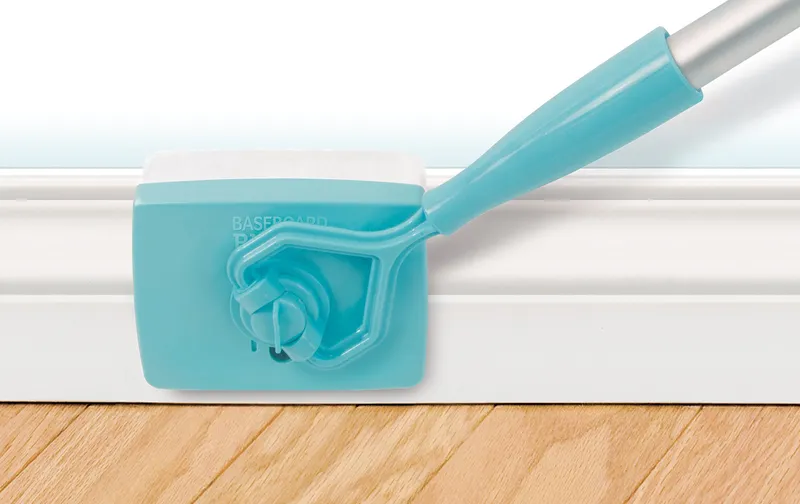
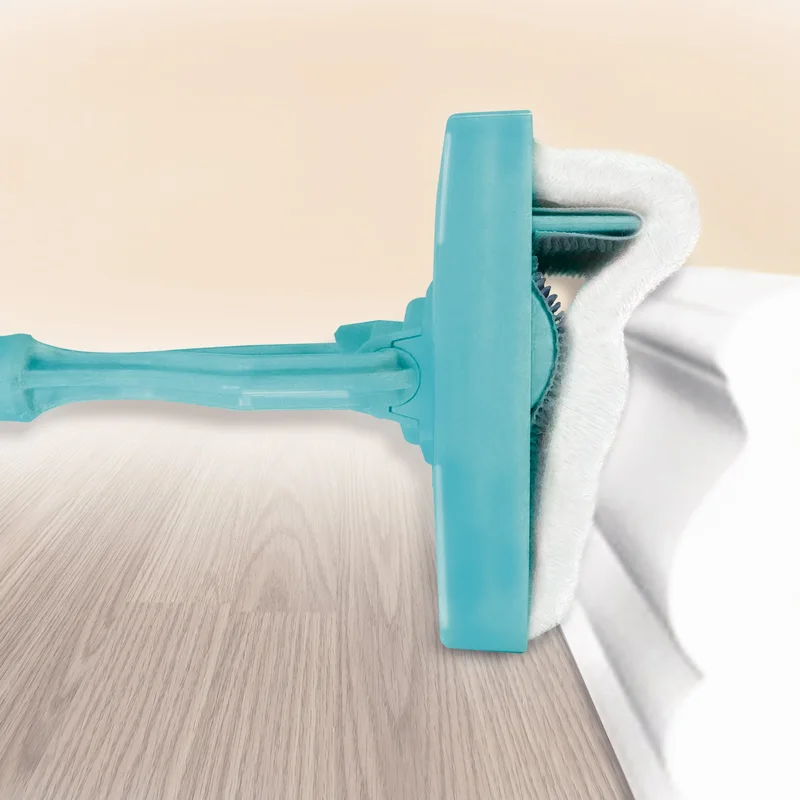
Why baseboards collect so much dust
A baseboard has a ledge. Dust that drifts down a wall lands on it and stays. Add pet hair, a vacuum that bumps the paint and the splash line from a mop, and the board is the dirtiest strip in a clean room.
Dust is more than fluff. There may be more allergens on surfaces than in the air. Surface allergens enter the air easily when you disturb them by dusting or sitting.
Asthma and Allergy Foundation of America That is the case for wiping it up with something that holds it, instead of flicking it into the room.
Dust dry first, then wipe damp
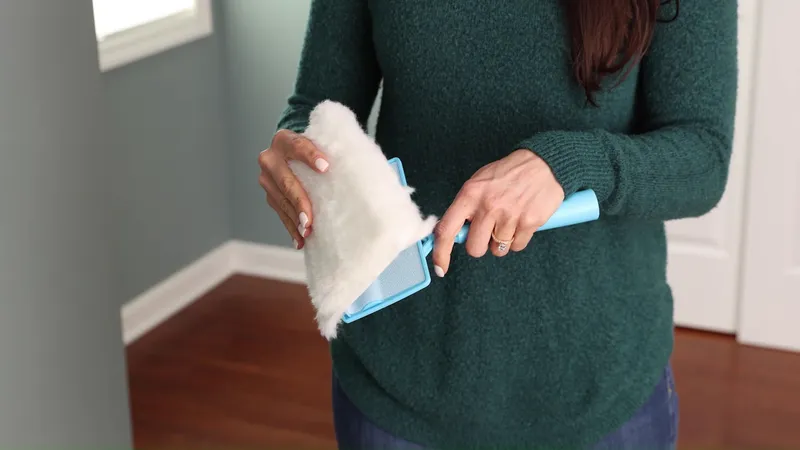
Start dry. A dry microfiber pad lifts loose dust and hair. Go around the room once, top edge first. If you start wet, the dust turns to grey paste and you chase it along the wall.
Then deal with what is left. Scuffs, splashes and kitchen film need a damp pad. Dampen the pad, not the wall. On Baseboard Buddy, a light mist of water or household cleaner on the pad is enough.
The CDC’s cleaning guidance explains why microfiber is the usual choice for this: Microfiber cloths are often preferred over cotton for both cleaning cloths and mop heads because microfiber absorb more dirt and microorganisms than cotton.
Centers for Disease Control and Prevention
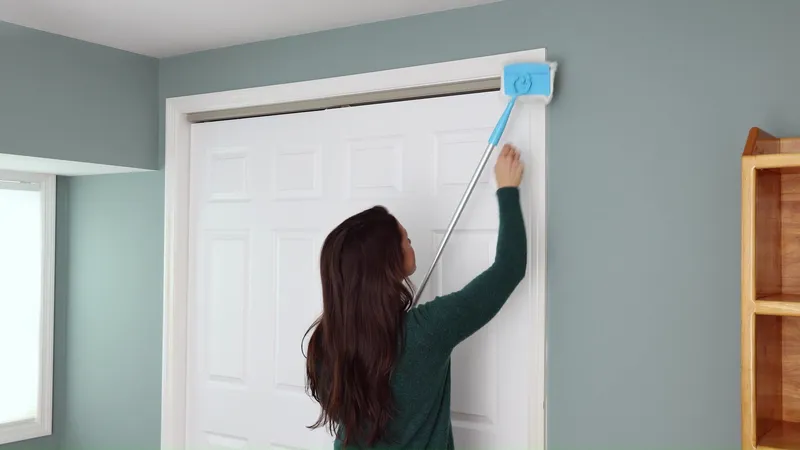
Work from the top of the room down
Dust falls. Wipe the tops of door casings first, then chair rails and sills, then the baseboards. Vacuum the floor last. With Baseboard Buddy the order is easy to keep, because the same pad does the casing and the board.
Homes built before 1978: wipe damp, never dry
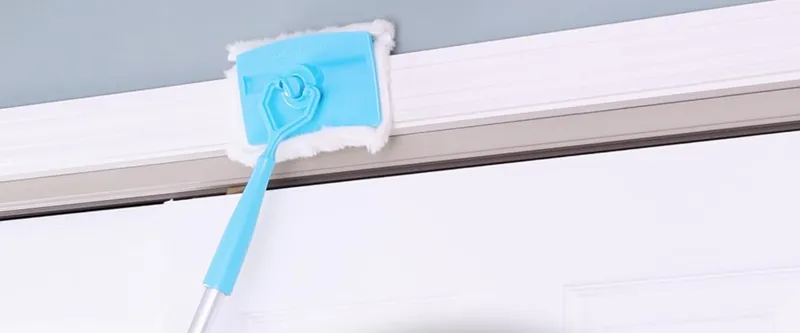
Old paint changes the rules. If your home was built before 1978, it is more likely to have lead-based paint.
U.S. Environmental Protection Agency The trim is where that paint is most likely to survive, under newer coats.
If the paint is sound, cleaning is safe and useful. The EPA’s advice for these homes: Clean your home weekly to minimize dust, which may contain lead. Wipe down hard surfaces – such as countertops, window sills and door jambs – with a damp sponge, cloth or paper towel.
U.S. Environmental Protection Agency
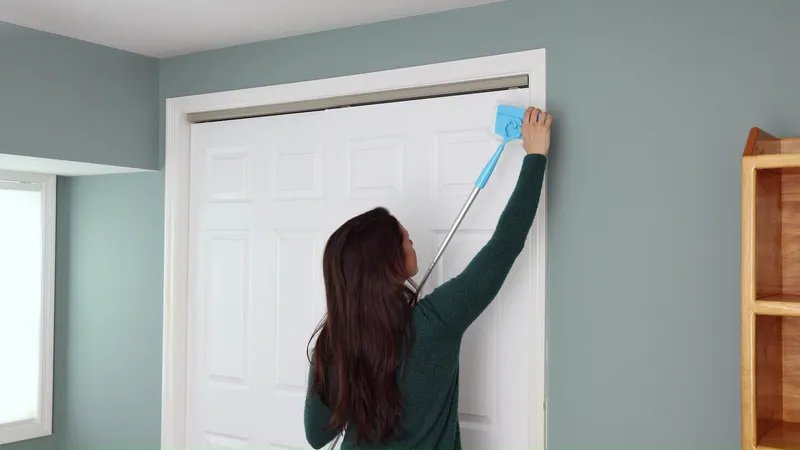
Two more lines from the same page matter for trim. Do not use steel wool, scouring pads or abrasive cleaners, like solvent cleaners that may dissolve paint.
U.S. Environmental Protection Agency And if paint is peeling or chipping: If you notice any peeling, chipping, chalking or cracking paint, clean the area immediately with a wet cloth, wipe, or sponge.
U.S. Environmental Protection Agency
So in an older house, use the pad damp and with a light hand, rinse it well afterwards and do not scrub at flaking paint. The CDC gives the same advice for sills: Windowsills and wells can also contain high levels of leaded dust, so they should also be kept free of dust.
Centers for Disease Control and Prevention
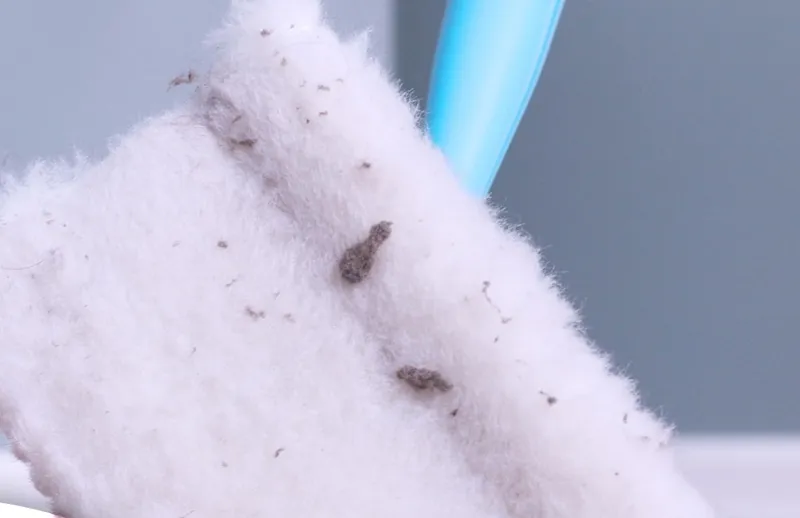
If dust sets off your allergies
The Asthma and Allergy Foundation of America keeps its advice short: Use a cloth that is damp or treated with polish for dusting.
Asthma and Allergy Foundation of America A damp Baseboard Buddy pad is that cloth on a handle.
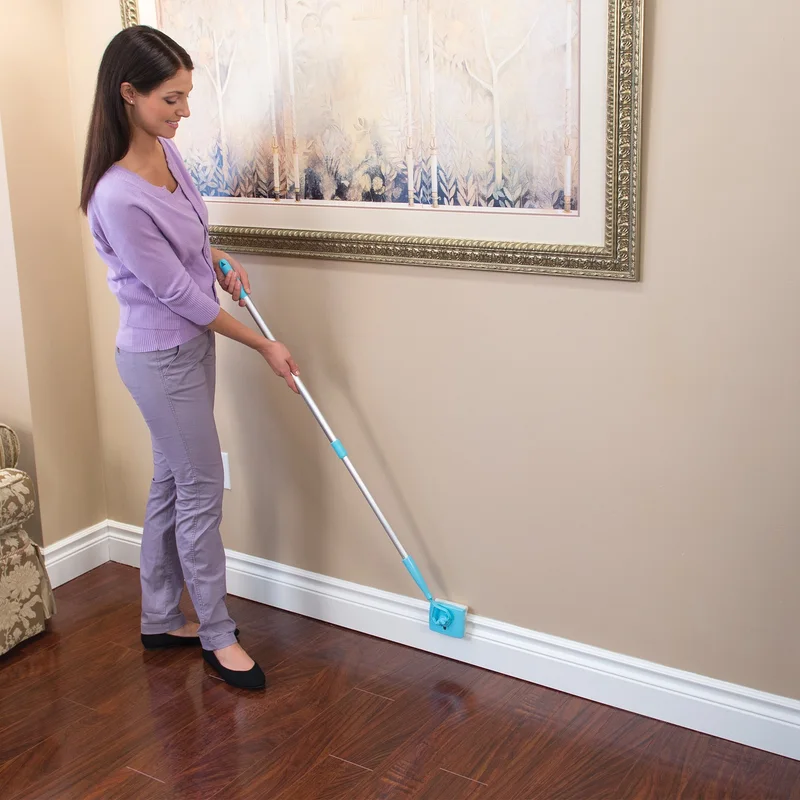
Where a long-handled tool fits
None of this needs a special tool. A cloth and a bucket will do it. The cost is time on your knees: about 169 feet of baseboard in a house of 580 square feet, by the room count in our calculator.
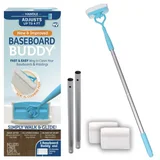
Baseboard Buddy does the long runs standing up, for $24.99 with three pads. Keep a cloth in your pocket for the corners.
General cleaning information. For lead testing or paint repair, ask your state or local health department or a certified lead professional.
Questions
Cleaning baseboards
What is the easiest way to clean baseboards without bending?
Use a long-handled tool with a pad shaped to the board. Baseboard Buddy has a handle of up to 4 feet and a pad that wraps the top edge. Dust dry, then go over scuffs with a damp pad.
How often should you clean baseboards?
No rule sets it. Dust them whenever you vacuum, and wipe them damp when scuffs show. In a home built before 1978, the EPA advises cleaning weekly, because old paint can add lead to house dust.
Is it safe to dust painted trim in an old house?
Use a damp pad, not a dry one, if the house was built before 1978 and the paint is worn. The EPA says to wipe surfaces with a damp cloth and never to sand or scrub chipping paint.
Sources
- Control Indoor Allergens to Improve Indoor Air QualityAsthma and Allergy Foundation of America · read 11 October 2026
- Cleaning Supplies and EquipmentCenters for Disease Control and Prevention · read 11 October 2026
- Reduce the Risk of Lead Exposure at HomeU.S. Environmental Protection Agency · read 11 October 2026
- About Lead in PaintCenters for Disease Control and Prevention · read 11 October 2026